I. Obesity Trends in the Middle East: A Challenge and an Opportunity for Insurers
Among the themes addressed, emerging health risks stood out as both a challenge and a potential growth area for insurers. A key example raised was the rising prevalence of obesity in the Middle East, including Lebanon and Gulf Cooperation Council (GCC) countries.
While obesity has long been recognized as a global public health challenge, it is increasing rapidly in the region, bringing with it both medical challenges and business implications.
According to the World Obesity Federation (2023):
In several GCC countries, including Kuwait, the UAE, Saudi Arabia, and Qatar, more than 35% of adults are classified as obese. In Kuwait, for example, 49.4% of children were considered obese as of 2019, with rates continuing to rise.
In Lebanon, adult obesity rates range between 25% and 27%, with childhood obesity also on the rise. Around 30% of girls aged 10 to 19 are obese, reflecting increasing health concerns.
This trend is closely linked to a surge in non-communicable diseases such as type 2 diabetes, cardiovascular conditions, musculoskeletal disorders, and certain cancers. The healthcare burden associated with obesity is growing — and so are the associated insurance risks.
Reframing Obesity as a Segmentation and Innovation Opportunity
Rather than viewing this purely as a risk, insurance providers can look at rising obesity rates as an opportunity for:
Market segmentation: Creating tailored insurance products for individuals with specific health profiles or risk factors.
Product innovation: Developing policies that include coverage for preventive care, nutrition counseling, weight management programs, or screenings for obesity-related conditions.
Dynamic underwriting: Using real-time or periodic health metrics from wearables to offer accurate pricing and personalized plans.
Wellness-linked coverage: Providing incentives like premium discounts or rewards for policyholders who meet specific health or weight goals.
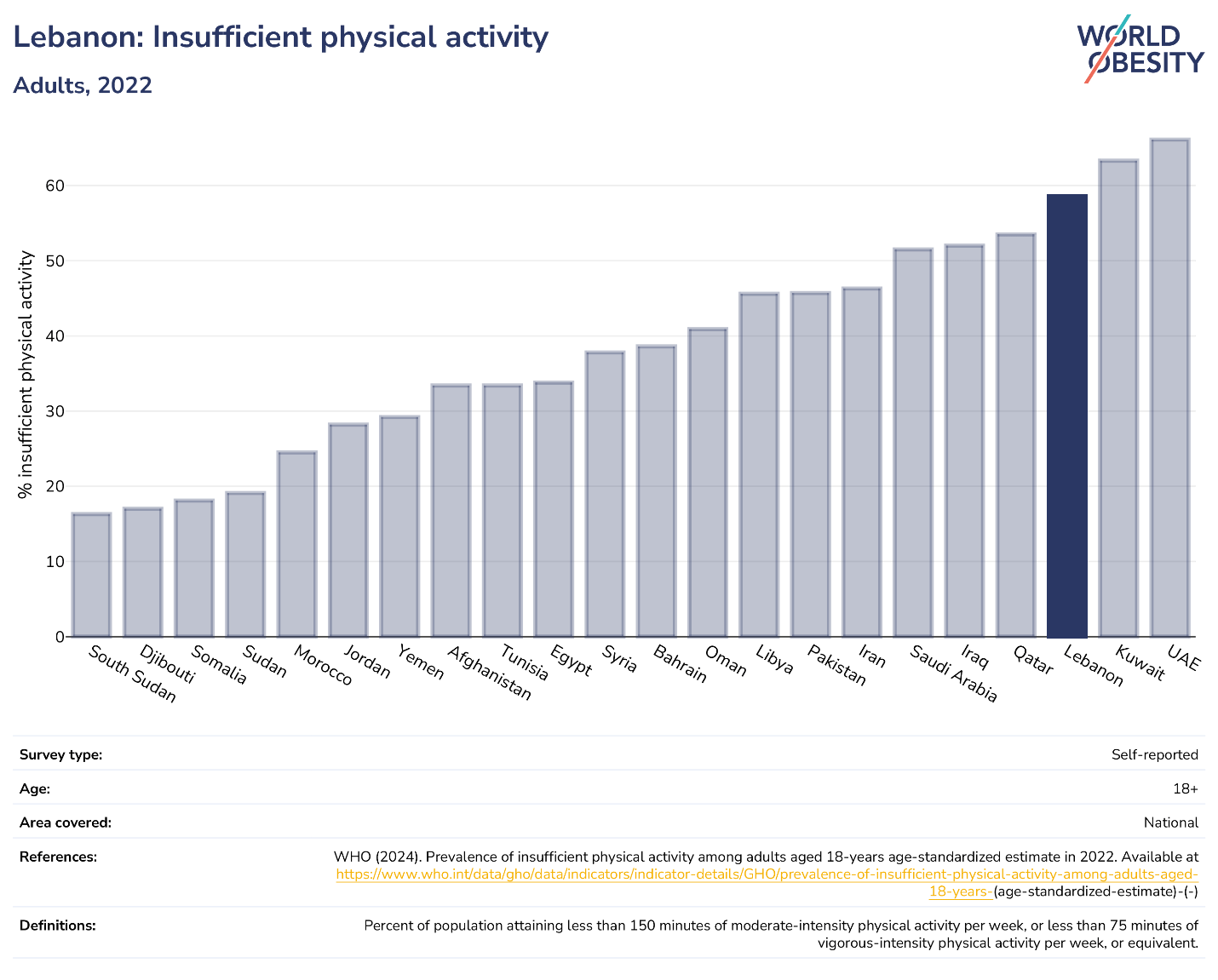
Recent data on physical activity levels adds further urgency to this discussion. According to the World Health Organization (2022), several Middle Eastern countries — including the UAE, Kuwait, Lebanon, Qatar, and Saudi Arabia — report some of the highest rates of insufficient physical activity among adults worldwide.
In the UAE and Kuwait, over 60% of adults do not meet the recommended minimum of 150 minutes of moderate or 75 minutes of vigorous physical activity per week.
Lebanon, Qatar, and Saudi Arabia also show rates exceeding 50%, indicating a widespread sedentary lifestyle.
These trends highlight the importance of insurance solutions that go beyond traditional coverage by promoting healthier behaviors, prevention programs, and wellness incentives.
These figures can serve as an indication that sedentary lifestyles — alongside dietary and environmental factors — are significant contributors to obesity and associated noncommunicable diseases in the region. They also underscore the need for insurance solutions that go beyond traditional coverage, actively encouraging healthier behaviors through prevention-oriented incentives and integrated wellness platforms, ultimately supporting better health outcomes and managing long-term risks.
In other markets, such initiatives have been integrated with digital health platforms and corporate wellness programs, opening the door for partnerships across sectors. For example:
Discovery Vitality (South Africa) offers an incentive-based health program that rewards members for engaging in physical activity, purchasing healthy foods, and undergoing regular health screenings. The model is so successful that it has been adopted in partnership with global insurers such as AIA (Asia), Generali (Europe), and Manulife (Canada) under the Vitality brand.
AXA (Hong Kong and France) has launched digital wellness platforms such as Emma by AXA, offering preventive care tools, fitness tracking integration, and mental health support.
Such programs demonstrate that integrating lifestyle incentives and health engagement tools into insurance products not only supports individual health outcomes but also contributes to reduced long-term claims, better risk management, and enhanced customer loyalty.
In the context of the Middle East — where lifestyle shifts, urbanization, and dietary changes are accelerating the problem — there is clear potential for insurers to play a more proactive and preventative role.
As the region grapples with lifestyle-related health risks like obesity, another pressure point emerges — the escalating cost of healthcare itself. The interplay between health trends and rising medical expenses compounds the challenges for insurers across the Middle East.