V. AI Regulation: Global Trends and Lebanon's Position
i. Global Landscape
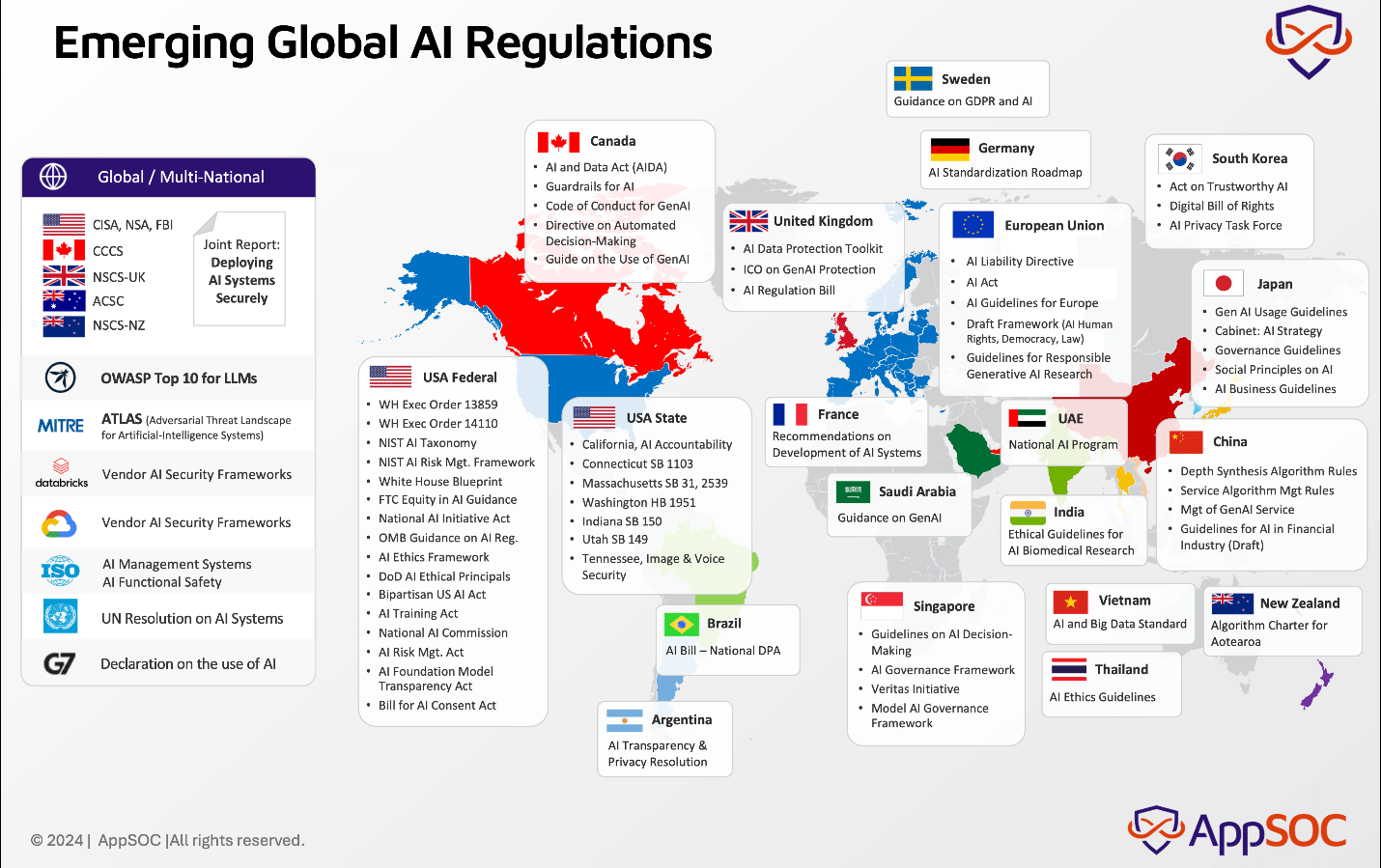
The global AI regulatory environment continues to evolve rapidly, with several countries taking proactive steps to establish governance frameworks around artificial intelligence. Below are key examples from around the world:
European Union: The EU has been proactive, introducing comprehensive AI regulations focusing on transparency, accountability, and ethical considerations.
United States: While federal regulations are still evolving, states like Colorado have enacted laws such as the Colorado Artificial Intelligence Act, emphasizing consumer protection and risk management.
China: Implemented the "Next Generation Artificial Intelligence Development Plan" and introduced measures for managing generative AI services.
United Arab Emirates: Launched the UAE Strategy for Artificial Intelligence, aiming to position the country as a global leader in AI by 2031. The strategy includes developing AI-friendly legislation and promoting AI education.
Saudi Arabia: Through the Saudi Data & Artificial Intelligence Authority (SDAIA), the country has issued guidelines for AI adoption, focusing on responsible and effective implementation.
Egypt: Established a national AI strategy in 2021, emphasizing the development of AI applications across various sectors. (Source: Grunitz, 2021)
The global AI regulatory landscape is in continuous development, with new policies and frameworks being introduced to address the ethical, legal, and societal implications of artificial intelligence technologies.
ii. Lebanon's Current State
Lebanon has taken initial steps towards embracing artificial intelligence:
Strategic Initiatives: In 2019, the Lebanese Ministry of Industry crafted an AI strategy for 2020–2050. Additionally, the Ministry of State for Administrative Reform partnered with UNESCWA to promote open government and emerging technologies.
Digital Transformation: The 2020–2023 Digital Transformation Strategy focuses on open governance and the development of open data portals.
Legal Frameworks: Law No. 81/2018 on Electronic Transactions and Personal Data was enacted, though implementation decrees are still pending.
(Source: MENA Observatory on Responsible AI)
iii. Challenges and Opportunities
Lack of Comprehensive Regulation: There's an absence of finalized AI regulations, leading to uncertainties in implementation and governance.
Data Privacy Concerns: With evolving AI technologies, ensuring data privacy and protection becomes paramount.
Potential for Growth: By learning from global examples, Lebanon can develop robust AI regulations that balance innovation with ethical considerations.
Some initiatives could involve collaborative efforts with regulatory bodies to establish a dedicated AI oversight entity, supported by syndicates, the Lebanese Association of Actuaries (LAA), and relevant ministries.
Given the time, financial investment, and coordination such steps may require, a practical starting point could be to promote public-private partnerships — encouraging collaboration between government entities and private sector stakeholders to foster innovation while maintaining regulatory compliance.
Closely tied to cyber risk is the rise of artificial intelligence — a powerful tool that brings both innovation and regulatory challenges. As AI transforms the risk landscape, jurisdictions worldwide are racing to define appropriate governance frameworks